

Hey there! As a supplier of submersible pump cables, I often get asked about the current capacity of these cables. It's a crucial topic because the right current - carrying capacity ensures the safe and efficient operation of submersible pumps. Let's dive into this topic and figure out what the current capacity of a submersible pump cable is all about.
First off, what exactly is current capacity? Well, it's the amount of electrical current that a cable can safely carry without overheating. Overheating can not only damage the cable itself but also pose a serious safety risk, like starting a fire. For submersible pump cables, this is even more important since they operate underwater, where heat dissipation can be a bit tricky.
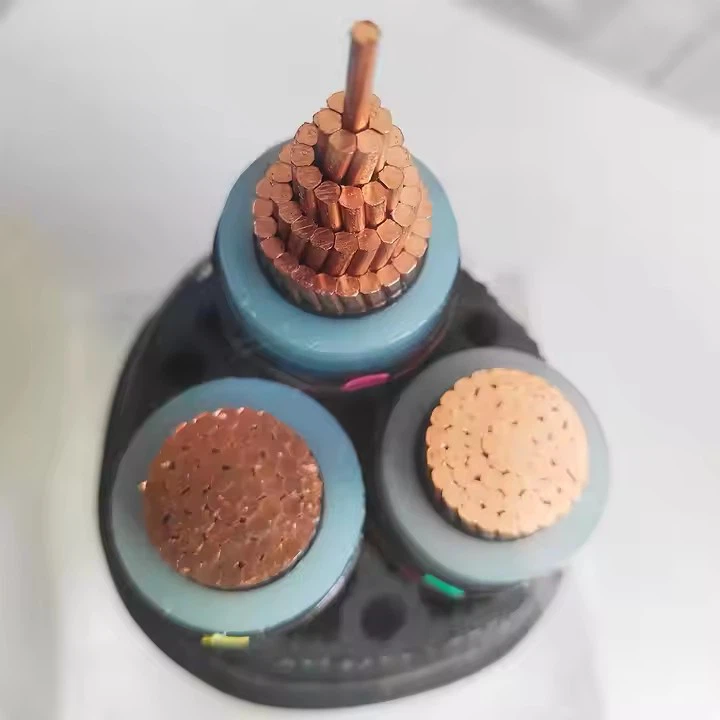
Several factors influence the current capacity of a submersible pump cable. The most obvious one is the cable's cross - sectional area. Think of it like a water pipe. A wider pipe can carry more water, right? Similarly, a cable with a larger cross - sectional area can carry more electrical current. For instance, a cable with a larger gauge number (smaller physical size) will have a lower current capacity compared to a cable with a smaller gauge number (larger physical size).
Another factor is the material of the conductor. Copper is the most commonly used material for submersible pump cables because it has excellent electrical conductivity. Aluminum can also be used, but it has a lower conductivity than copper. So, for the same cross - sectional area, a copper cable will have a higher current capacity than an aluminum one.
The ambient temperature also plays a role. If the cable is operating in a hot environment, it will have a lower current capacity because the heat from the environment makes it harder for the cable to dissipate the heat generated by the electrical current. Submersible pump cables are often in water, which can help with cooling. But if the water is warm, it won't be as effective at cooling the cable, and the current capacity will be reduced.
Insulation is yet another important factor. High - quality insulation can withstand higher temperatures, which means the cable can carry more current without overheating. Good insulation also protects the conductor from moisture and other environmental factors, which is crucial for submersible pump cables that are constantly in water.
Now, let's talk about how to determine the current capacity of a submersible pump cable. Manufacturers usually provide ampacity tables. These tables list the maximum current that a cable can carry based on its size, material, and other factors. For example, a 14 - gauge copper submersible pump cable might have a current capacity of around 15 - 20 amps under normal conditions. But if the cable is in a hot environment or has a lower - quality insulation, this capacity could be reduced.
It's also important to consider the load of the submersible pump. You need to know the power requirements of the pump to select the right cable. The power of a pump is usually given in horsepower (HP) or kilowatts (kW). You can use the power formula P = VI (Power = Voltage x Current) to calculate the current draw of the pump. Once you know the current draw, you can select a cable with a current capacity that is higher than the pump's current draw to ensure safe operation.
When it comes to our product range, we offer a variety of submersible pump cables with different current capacities to meet the needs of different pumps. We also have other types of cables that might be useful in related applications. For example, if you're looking for a flexible control cable, check out our Flexible Control Cable YY CY SY LiYCY. It's great for controlling various electrical devices.
If you need a cable for high - voltage applications, our High Voltage Power Cable is a great option. It's designed to handle high - voltage currents safely and efficiently. And for welding applications, our Welding Machine Cable YH Cable is a reliable choice.
So, how do you make sure you're getting the right submersible pump cable with the appropriate current capacity? First, consult with a professional. An electrician or a pump technician can help you determine the power requirements of your pump and select the right cable. Second, always buy from a reputable supplier. We've been in the business for a long time, and we know how important it is to provide high - quality cables that meet safety standards.

If you're in the market for submersible pump cables or any of our other products, don't hesitate to reach out. We're here to help you find the right cable for your needs. Whether you're a small - scale user or a large - scale industrial customer, we can offer you the best solutions.
In conclusion, understanding the current capacity of a submersible pump cable is essential for the safe and efficient operation of your pump. By considering factors like cross - sectional area, conductor material, ambient temperature, and insulation, you can select the right cable. And if you need any help or have any questions, we're just a message away.
References
- Electrical Wiring Handbook, various editions
- National Electrical Code (NEC) for guidelines on cable ampacity