

What are the moisture - resistance properties of new energy cables?
Sep 03, 2025
Leave a message
As a seasoned supplier in the new energy cable industry, I've witnessed firsthand the crucial role that moisture resistance plays in the performance and longevity of these cables. In the realm of new energy, where cables are often exposed to harsh environmental conditions, their ability to withstand moisture is not just a desirable feature but a necessity.
The Importance of Moisture Resistance in New Energy Cables
New energy sources such as solar and wind power are at the forefront of the global shift towards sustainable energy. Solar panels are typically installed outdoors, where they are exposed to rain, humidity, and even snow in some regions. Wind turbines, on the other hand, are often located in coastal areas or offshore, where the air is saturated with moisture. In both cases, the cables used to transmit the generated power need to be able to resist moisture to ensure reliable operation.
Moisture can have a detrimental effect on cables in several ways. Firstly, it can cause corrosion of the cable conductors. When water comes into contact with metal conductors, it can initiate a chemical reaction that leads to the formation of rust or other corrosion products. This not only reduces the conductivity of the cable but also weakens its mechanical strength, increasing the risk of cable failure.
Secondly, moisture can degrade the insulation material of the cable. Insulation is essential for preventing electrical leakage and ensuring the safety of the cable system. However, when moisture penetrates the insulation, it can cause it to swell, crack, or lose its dielectric properties. This can lead to increased electrical losses, short circuits, and even electrical fires.
Finally, moisture can promote the growth of mold and fungi on the cable surface. These microorganisms can not only damage the cable insulation but also pose a health risk to maintenance personnel. In addition, the presence of mold and fungi can reduce the aesthetic appeal of the cable system.
Moisture - Resistance Technologies in New Energy Cables
To address the challenges posed by moisture, cable manufacturers have developed a variety of moisture - resistance technologies. One of the most common methods is the use of moisture - resistant insulation materials. Cross - linked polyethylene (XLPE) and cross - linked polyolefin (XLPO) are two popular choices for new energy cables due to their excellent moisture resistance, electrical properties, and mechanical strength.
XLPE is a thermosetting polymer that is widely used in high - voltage and medium - voltage cables. It has a low water absorption rate and good resistance to environmental stress cracking. XLPO, on the other hand, is a more flexible and lightweight alternative to XLPE. It also offers good moisture resistance and is suitable for use in solar cables.
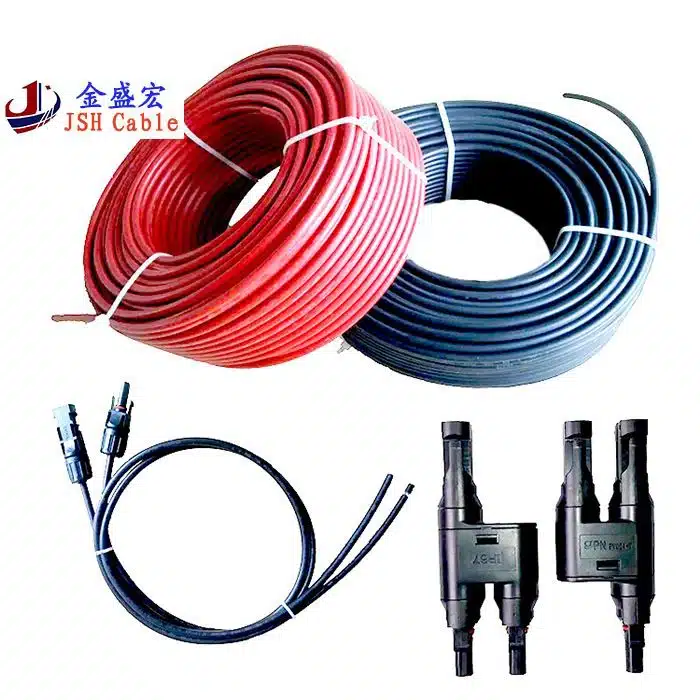
For example, our XLPE/XLPO Solar Wire PV1 - F Dc Solar PV Cable is designed with XLPE or XLPO insulation to provide superior moisture resistance. This cable is specifically tailored for solar power systems and can withstand the harsh outdoor conditions typically encountered in solar installations.
Another important moisture - resistance technology is the use of cable sheathing. The cable sheath acts as a protective layer that prevents moisture from entering the cable core. Common sheath materials include polyvinyl chloride (PVC), polyethylene (PE), and thermoplastic elastomers (TPE). PVC is a widely used sheath material due to its low cost and good mechanical properties. PE, on the other hand, offers excellent moisture resistance and is often used in outdoor and underground cables. TPE is a more flexible and environmentally friendly alternative to PVC and PE.
In addition to insulation and sheathing materials, cable manufacturers also use other techniques to enhance moisture resistance. For example, some cables are filled with a water - blocking gel or tape. This gel or tape can absorb any moisture that enters the cable and prevent it from spreading along the cable core.
Testing and Certification of Moisture - Resistance Properties
To ensure the quality and performance of new energy cables, it is essential to conduct rigorous testing of their moisture - resistance properties. There are several international standards and test methods available for evaluating the moisture resistance of cables.
One of the most widely recognized standards is the International Electrotechnical Commission (IEC) standard. The IEC 60502 series of standards, for example, specifies the requirements for power cables with extruded insulation. These standards include tests for water penetration, water absorption, and electrical performance under wet conditions.
Another important standard is the UL (Underwriters Laboratories) standard. UL 4703, for instance, is a standard for photovoltaic (PV) cables. It includes tests for moisture resistance, flame resistance, and UV resistance. Cables that meet these standards have been proven to perform well in real - world applications.
Our Dc Solar Pv Cable Solar Cable 4mm 6mm has undergone extensive testing to meet the relevant international standards. We are committed to providing our customers with high - quality cables that offer reliable moisture resistance and long - term performance.
Real - World Applications and Case Studies
In real - world applications, the moisture - resistance properties of new energy cables are critical for the success of solar and wind power projects. For example, in a large - scale solar farm located in a coastal area, the cables need to be able to withstand the high humidity and salt spray. If the cables do not have adequate moisture resistance, they may fail prematurely, leading to costly downtime and repairs.
In a wind farm project, the cables used to connect the turbines to the substation are often buried underground or installed in trenches. These cables are exposed to groundwater and soil moisture, which can pose a significant challenge to their moisture resistance. By using cables with excellent moisture - resistance properties, the reliability of the wind farm can be significantly improved.
One case study involved a solar power project in a tropical region. The project initially used cables with poor moisture resistance, and within a few months, the cables started to show signs of corrosion and insulation degradation. After replacing the cables with our moisture - resistant cables, the project experienced a significant reduction in cable failures and improved overall performance.

Conclusion and Call to Action
In conclusion, the moisture - resistance properties of new energy cables are of utmost importance for the reliable operation of solar and wind power systems. As a leading supplier of new energy cables, we are dedicated to providing our customers with cables that offer superior moisture resistance, excellent electrical performance, and long - term durability.
If you are involved in a new energy project and are looking for high - quality moisture - resistant cables, we invite you to contact us for a detailed discussion. Our team of experts can help you select the right cables for your specific application and provide you with the technical support you need. Let's work together to build a more sustainable and reliable new energy future.
References
- International Electrotechnical Commission (IEC). IEC 60502 - 1:2014, Power cables with extruded insulation and their accessories for rated voltages from 6 kV (Um = 7.2 kV) up to 30 kV (Um = 36 kV) - Part 1: Cables for rated voltages from 6 kV (Um = 7.2 kV) up to 20 kV (Um = 24 kV).
- Underwriters Laboratories (UL). UL 4703:2018, Standard for Photovoltaic Cables.
- Various industry reports on new energy cable technology and applications.
Send Inquiry